
🟢 'Thinking in Bets': a handbook for innovation portfolio decisions
Bad timing on my part; this is a book I should have recommended as a summer read. Now we are all back at our desks, but hey, it reads just as well on a Tuesday evening in September!
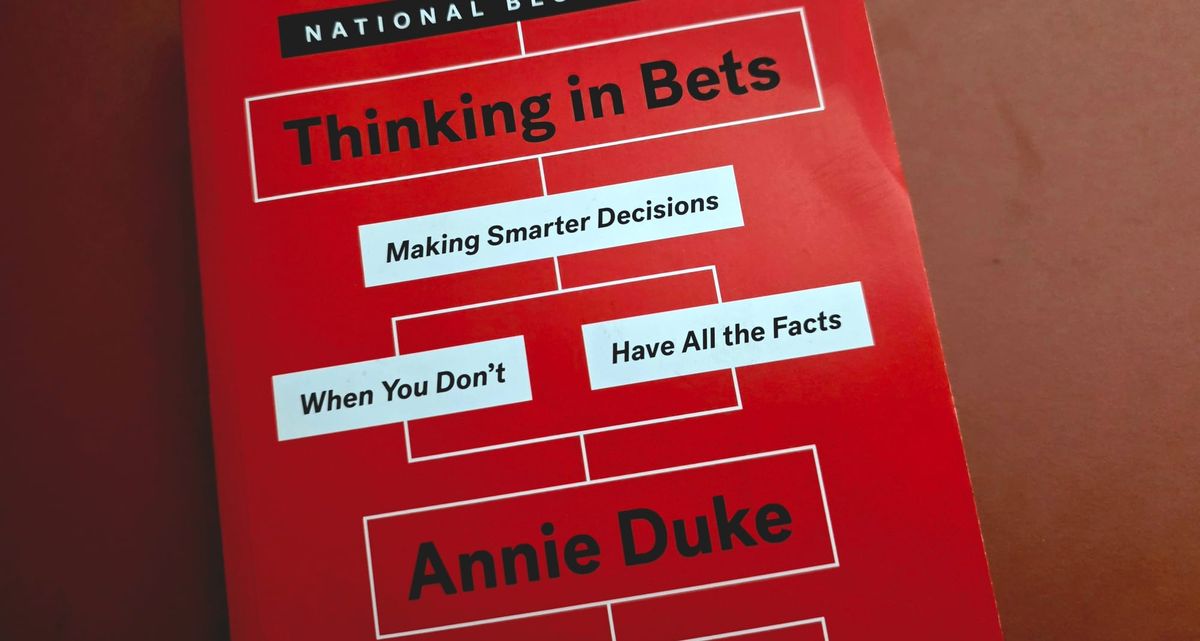
After 20+ years in the field, it's quite rare to find a business book that interests me, or that even addresses innovation from the risk and opportunity point of view. Annie Duke's book (a cognitive psychology doctorate who quit university for professional poker) is just one of the rare ones.
'Thinking in Bets' is all about decision quality. Which is the separation between how a decision was made and how it happened to turn out.
Let me explain.
Managers, leaders, and exec committees at large industrial companies are usually overzealous in trying to reach maximum certainty for any decision-making. If you can't prove that five years from now any investment will be a resounding success, don't even bother trying to submit your project for approval. And most innovation projects end up being treated with the same criteria as changing a factory's roof or plumbing.
Five ideas worth extracting from Thinking in Bets
The first idea laid out by Duke is resulting, which is grading a decision by its outcome. When playing in an uncertain field, aiming for a clear outcome with significant upsides is always step one. Whether you win or lose, you allocated resources smartly, playing for a win that would matter.
This seems trivial, but it's not. For most innovation projects I start working on, the challenge is rarely quality or ambition; it's execution capability: delivery trumps impact. This is why one of my core corporate training courses on innovation starts by preventing teams from working on their solution and tech in the first weeks, until they get a real sense of an interesting problem to solve.


