
AI is looking for problems to solve: grocery shopping is among the worst ones

Here we go again.
This morning LinkedIn decided to feed me one of its inept ads, thinking I'd be ravished by its pertinence (the fact that LinkedIn's algorithm is not half as good as Instagram's does say something about Microsoft – but this is another story).
I give you Jowzi.
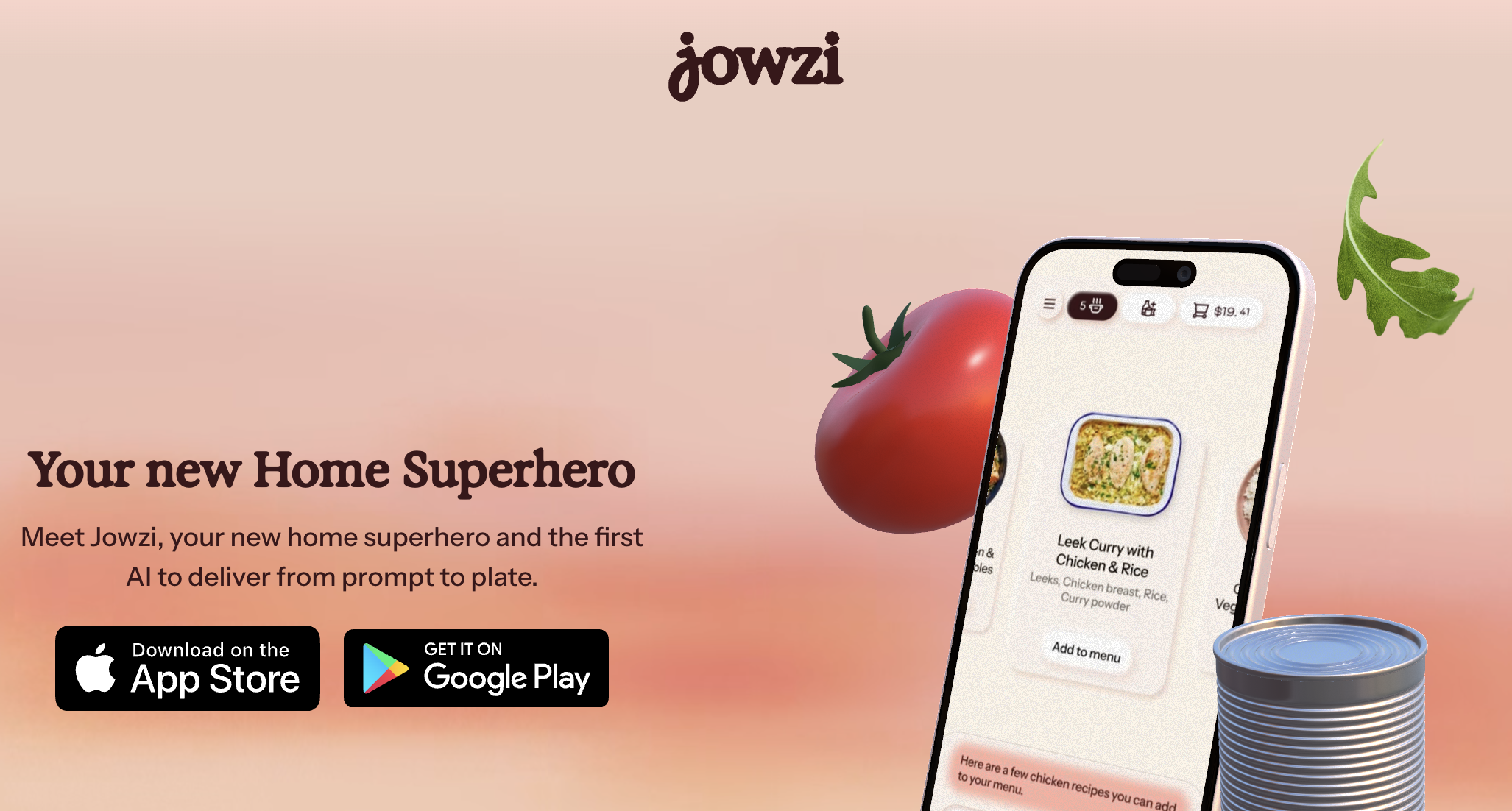
The app is just starting and is an extension of Jow, a French startup that is now live in the US after what seems to be a successful $13 million Series A.
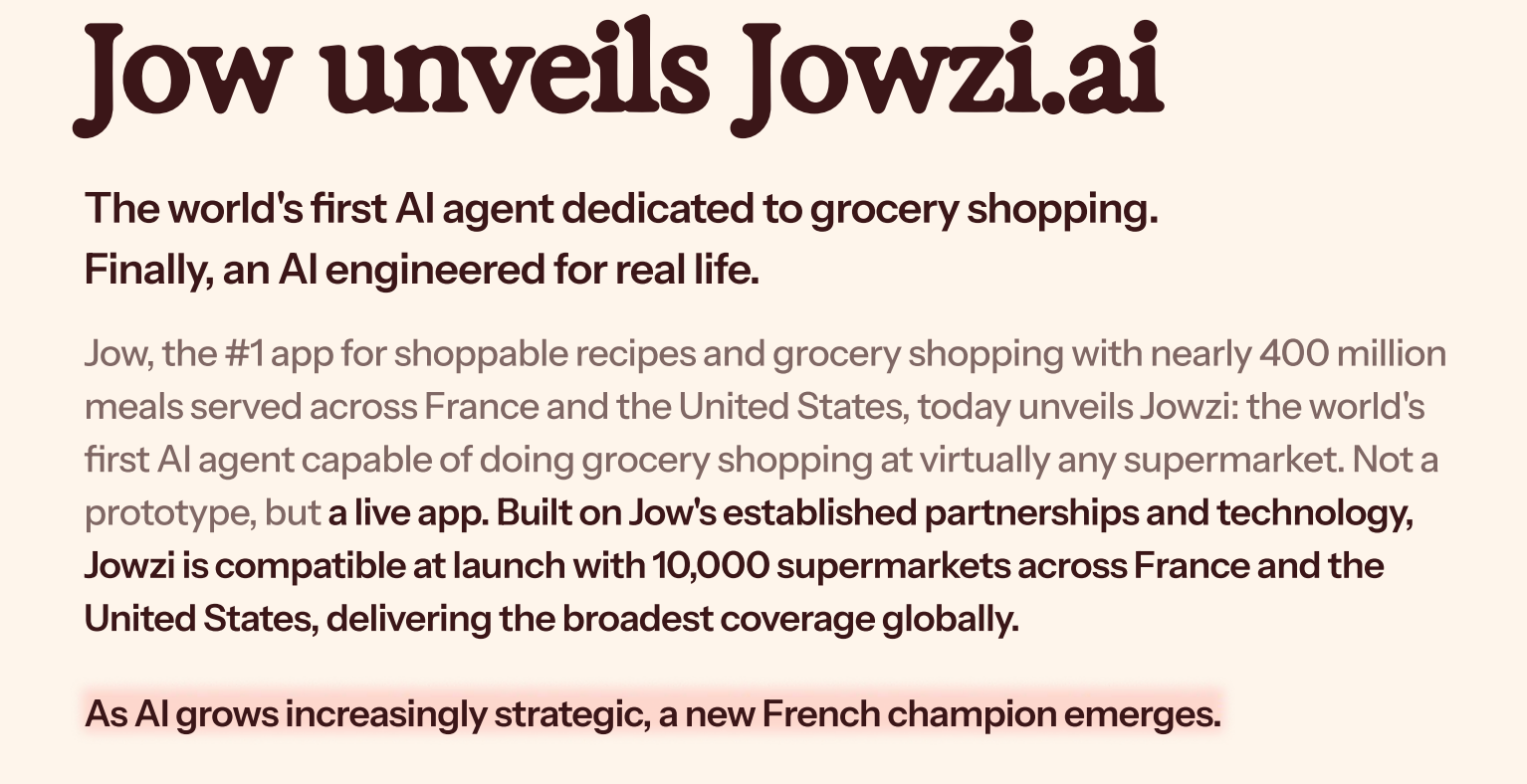
When I say, "here we go again," it's because this field is your typical tech solution in search of a problem to solve. No one on the planet is that helpless at finding recipes or making sense of the product they could use in their fridge, needing an intricate multi§step add to save them. Would they go on YouTube or TikTok? You bet.
More than that? Wishful, at best.
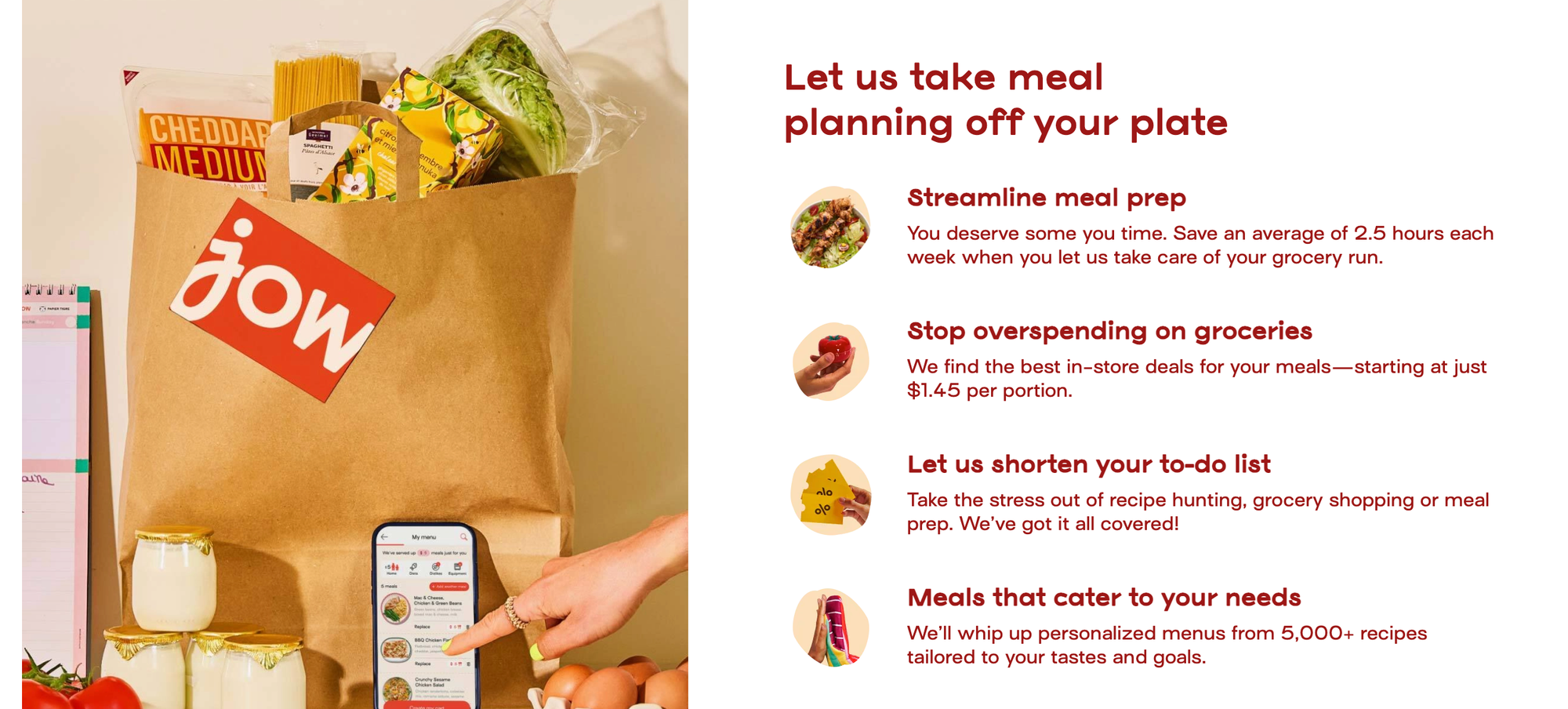
With a flimsy business case, deciding that slapping an AI model on this to become more efficient at doing things that no one really needs is beyond weird. Until, of course, you remember that they probably had to tell a magical story to get a Series A going, and what better than AI in 2026, when NFTs, blockchain, and the metaverse have been a bust?
But there's the overspending thing...
This is not nothing. Quite the contrary. Between US tariffs, the war in Ukraine, the price of oil, and, not to forget, climate change, there are so many dramatic events that let us know that the price of groceries is going to be a huge problem to solve for the next five to fifty years, so we can't discard this real problem.
Using the online Jow (Jowzi's mothership) simulator, this is an estimate of how much you would save per year using their regular app:
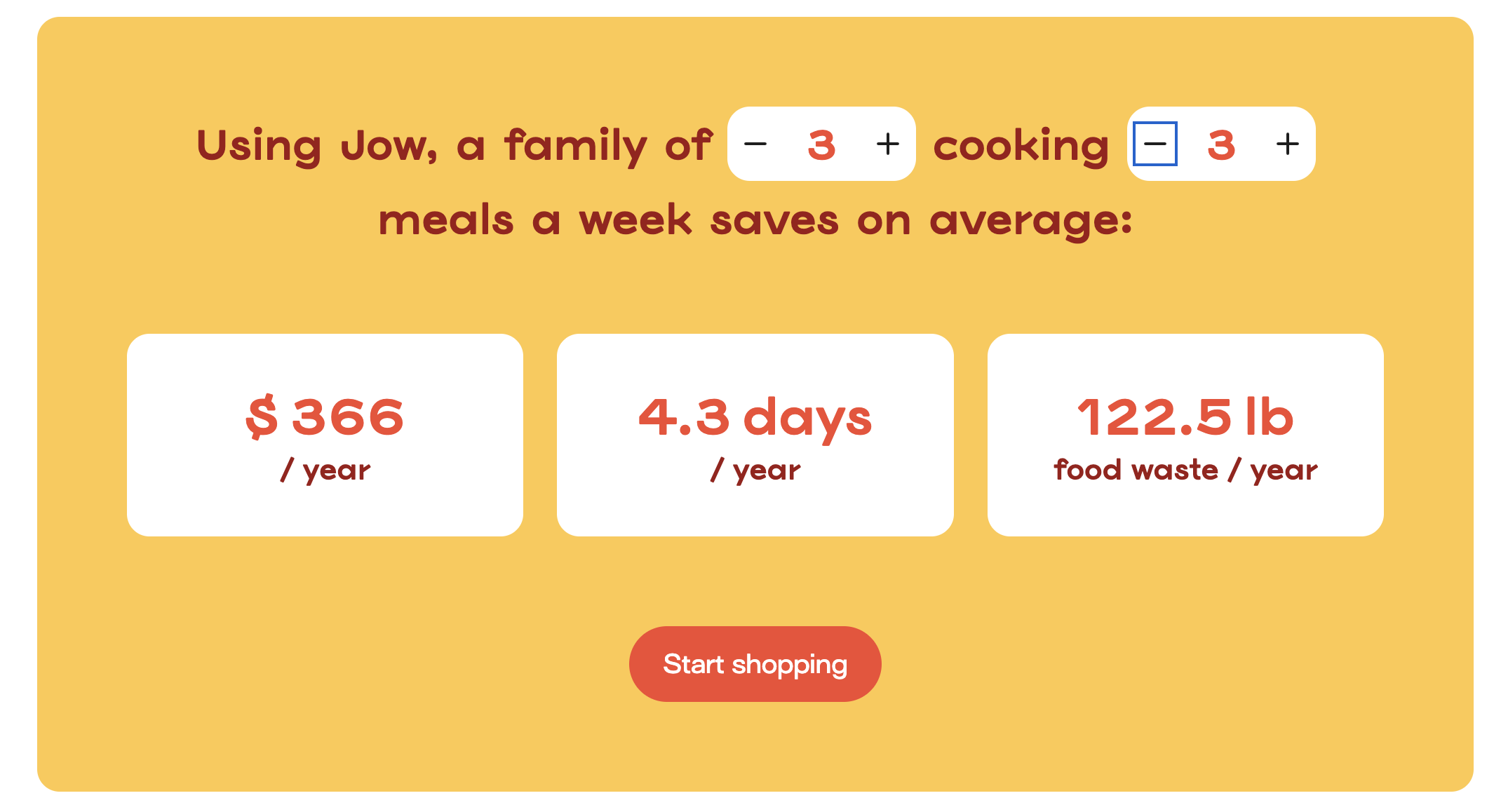
First, I would say that saving prep-meal time is never a practical value-add. Of course, a single mother of six juggling two jobs could feel this pain strongly and see the value, but she will never compute it in saved days (saying 30 min a day in that case would be much more in line with the target consumer). Nor will she really care about the food waste or environmental impact. I know, it seems cynical, but the number of consumers who actively track how much food weight they waste every year isn't in 'millions.'
Still, there's the saving money part.
At about $1 per day, I let you decide how impactful that could be (and yes, I'm fully aware that $30 a month can make or break some struggling family's budget). So while not completely off base, this indicator is, at best, unconvincing.
In this market, the heavyweight champion is indisputably Instacart.
In Q1 2026, Instacart reported a whopping $144 million net income, up 36% year-over-year, and $111 million in Q2 2026. Amazing? Certainly, until you notice Instacart's entire 2025 adjusted EBITDA of roughly $1.087 billion was almost exactly matched by the $1.065 billion it made from advertising. Instacart, one of the rare successes in the online grocery market, is, in practice, an ad business. The logistics itself still barely breaks even.
That's why Amazon shut all 57 of its Fresh supermarkets in January 2026, and Kroger paid Ocado $350 million to exit automated warehouse contracts it had spent five years building. All in all, it's a wishful market until you plug another money-making engine into it.
Back to Jowzi, if you dig a bit further into their presentation materials, you'll find things like that:
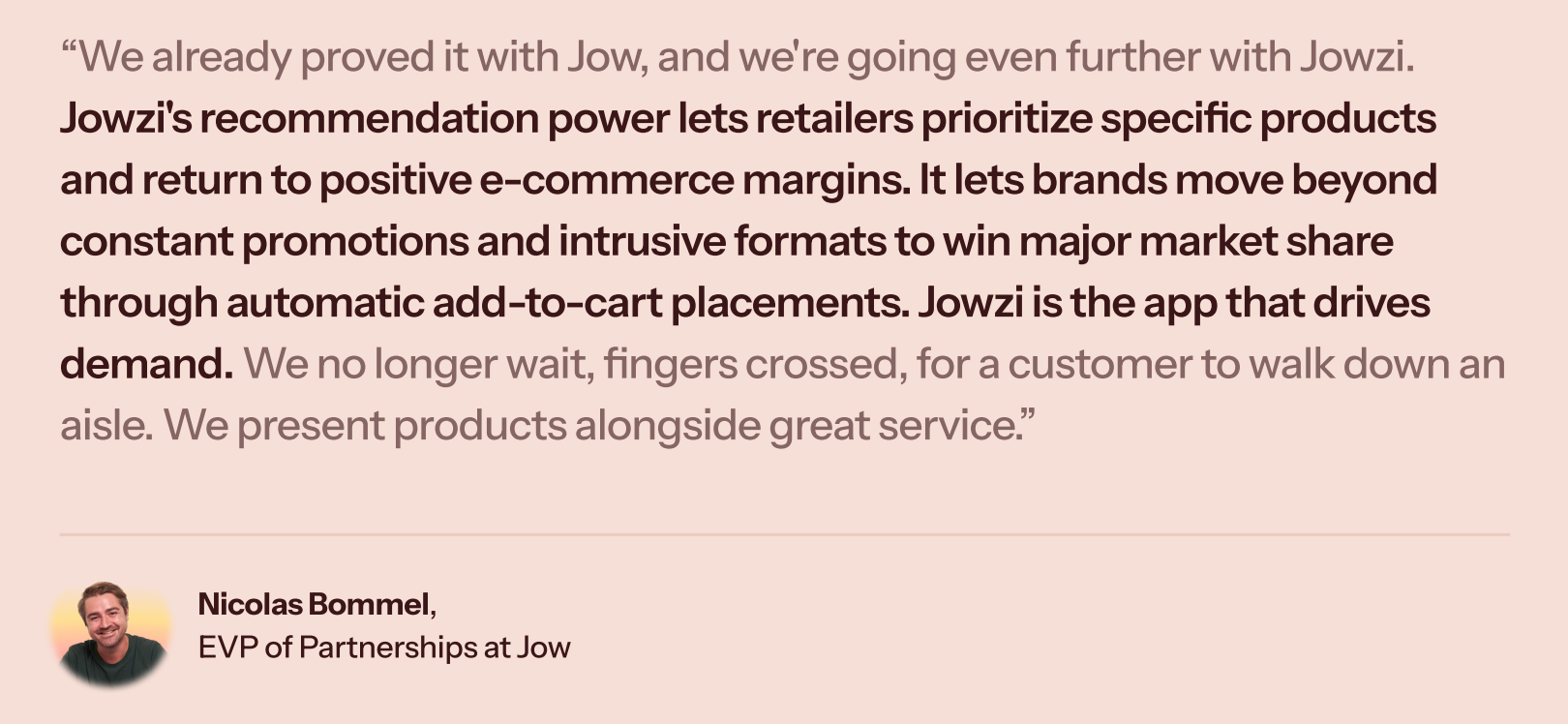
Now, you too get to see where the money-making engine is.
Retailers power the engine: they are the real customers (who, in business, let me remind you, are the ones that actually give you money). As it seems, what Jow seems smart enough to do is pull an Instacart, except that instead of ads, they sell targeted inventory to consumers for brands.
And they seem to have real superpowers here:
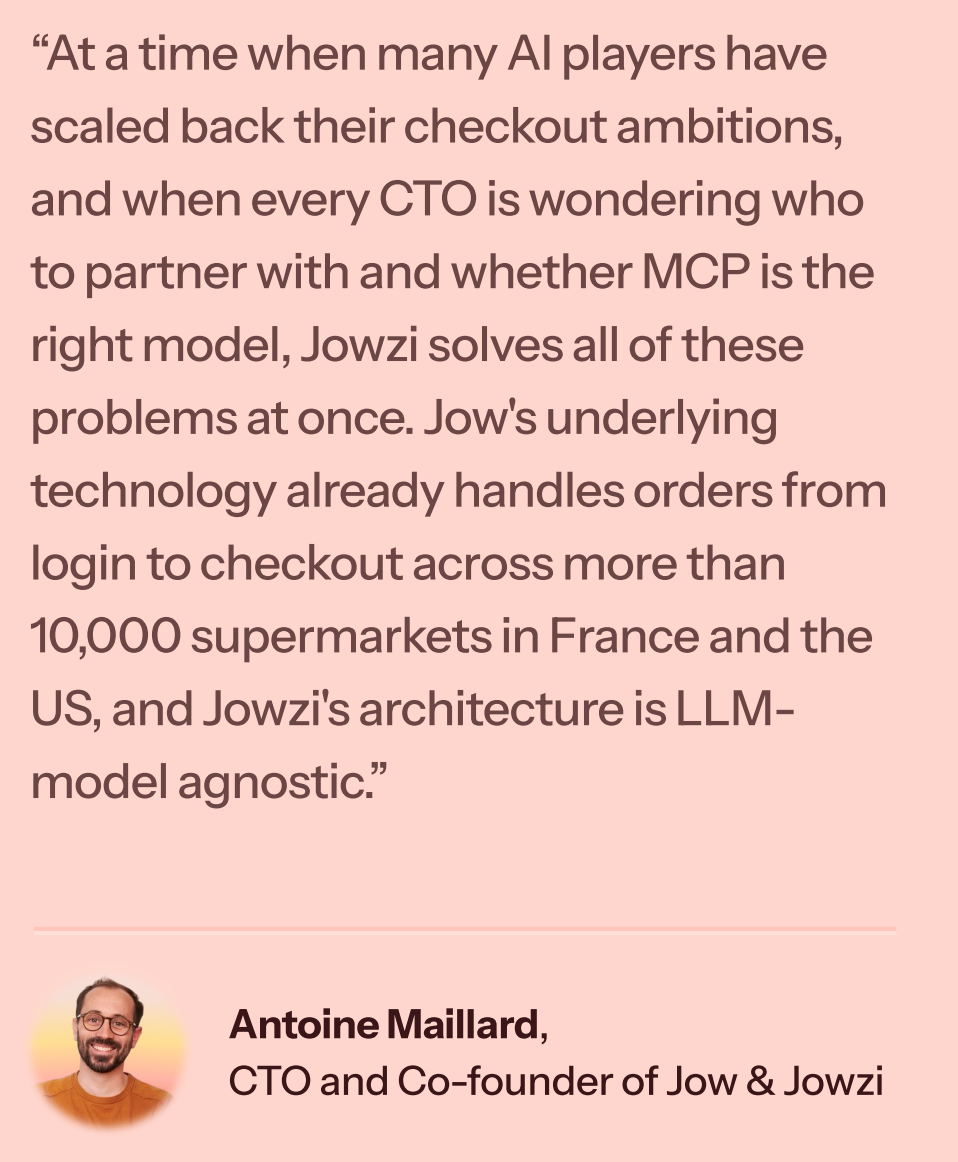
-- What to do with all this?
I have nothing against Jow and Jowzi. I don't know the team; I don't know their plan or strategy, and I'm pretty happy for them for raising significant money from France in 2026. Really, kudos. And you probably don't know them either and couldn't care less about online grocery shopping with or without AI.
But...
This is very symptomatic of what is certainly a very smart team getting some interesting foothold in an ultra-competitive market without managing to be clear about who the customers are and what the real value they unlock is (food brands and inventory management), but instead telling stories about how much the indirect customers (families prepping meals) need them – they don't, unless they sell plain and simple economic discount.
A more frontal strategy would be:
Option 1 - Inventory and waste framing:
Jowzi helps food brands and retailers turn down-to-the-week demand signals into faster inventory turns on perishables, fine-tuning which products get recommended to 4.5M households in France today, and soon 20M in the U.S., so a brand's freshest stock sells before it ages out.
Option 2 - Demand and forecast framing
Jowzi gives food brands a direct dial on demand: because 8 in 10 items in a Jowzi cart come from the agent's own recommendation, instead of a random search, brands can shift volume toward near-expiry batches or new SKUs across 4.5M French households now, 20M U.S. households next. All this without wasting money on single price promotion.
Option 3 - Media and retail-data framing (Instacart-adjacent)
Jowzi turns meal-planning AI into a targeting layer for food brands. Instead of buying shelf space or a banner ad, brands buy the recommendation itself, reaching 4.5M French families today and a projected 20M in the U.S., matched to what each household is about to cook this week.
(I've put numbers just for the sake of the discussion: once again, I have no clue whatsoever about their business.)
This is what matters for you as well: strategic clarity means clear messaging. Not to mention, letting go of customers' problems you invent yourself in creative meetings or business design workshops that will never survive contact with market reality...


