🟢 The pace layers of innovation
Why the different forms of innovation can only move at a different speed. Not so much because some are slower or faster, but because they impact different layers of the market infrastructure.

In The Clock Of The Long Now, Stewart BRAND introduced a simple but powerful model for how the different layers of our civilization were evolving at different paces. From the break-neck speed of fashion and commerce to the slower tectonic shifts of culture and nature.
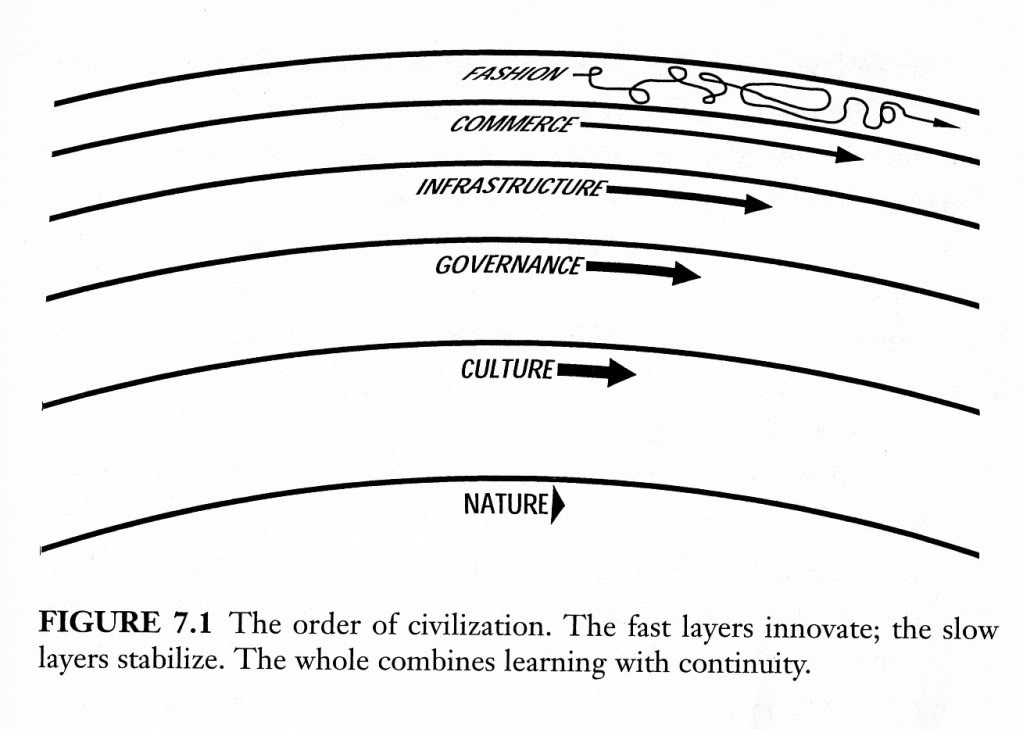
Once seen, like any powerful mental model, it's difficult to forget.
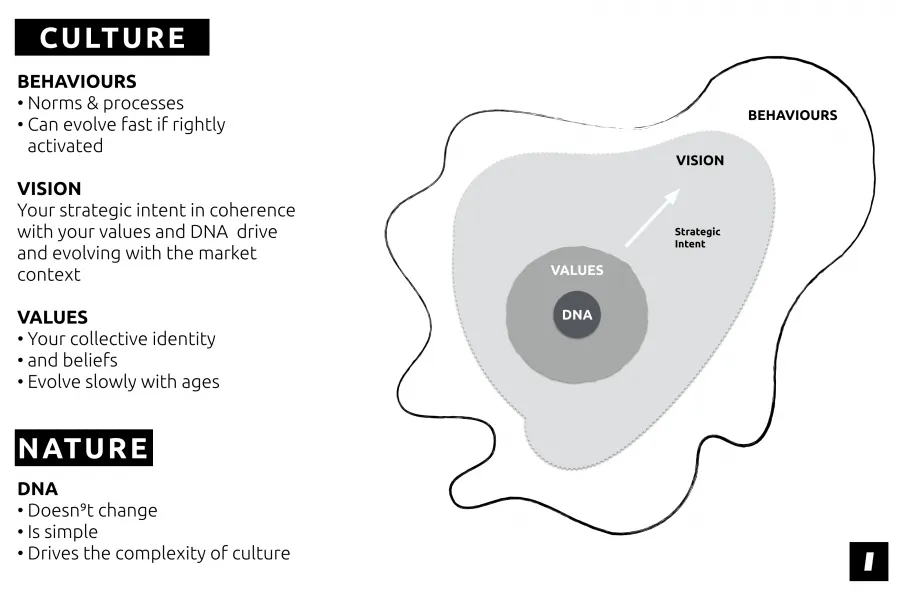
Stéphanie referred to it too in 2017 when working on the different stacks of corporate culture change:
I also caught myself coming back to it just a few days ago to develop how a more systemic approach to innovation was necessary in turbulent times. The core idea is that innovation is both a slow and fast game, which is constrained by different types of market infrastructures:
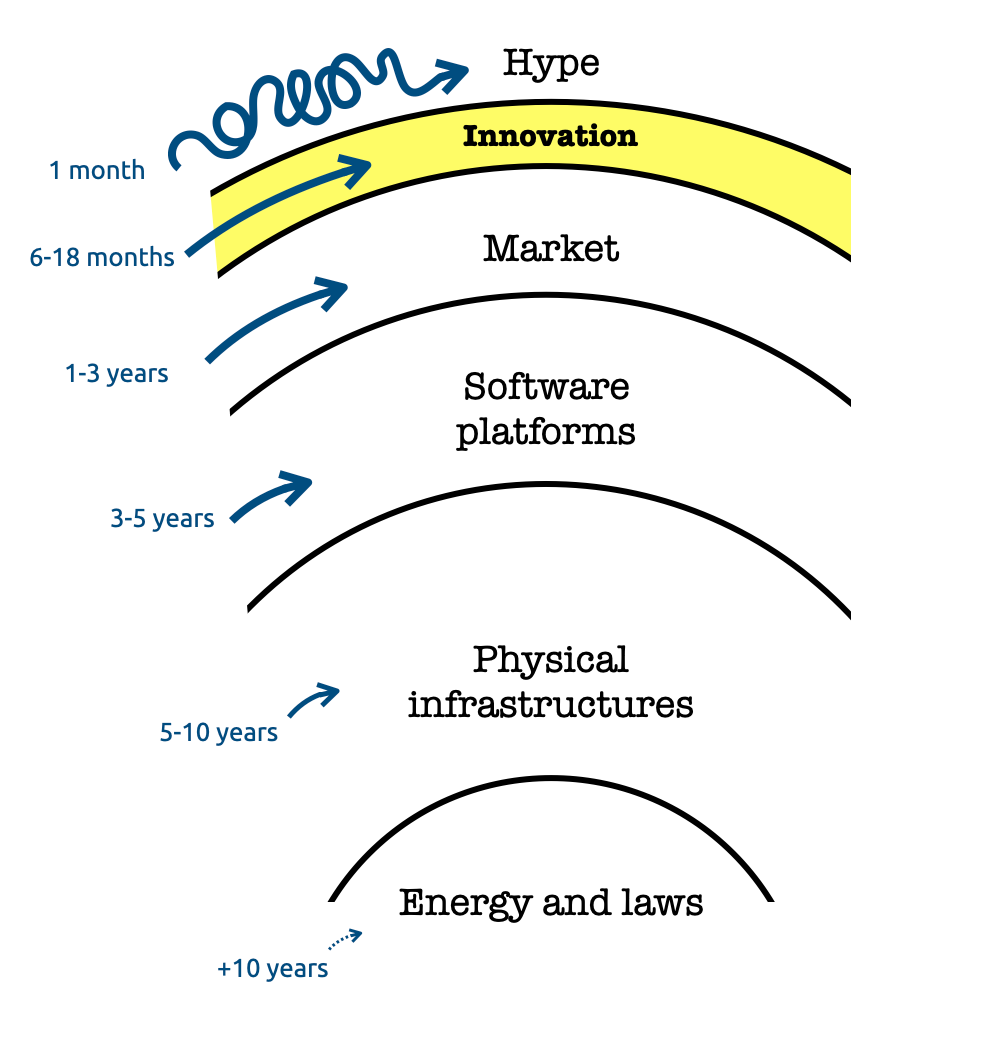
To have a decent shot at delivering business opportunities, different innovation modes are necessary with shorter or longer payoffs:
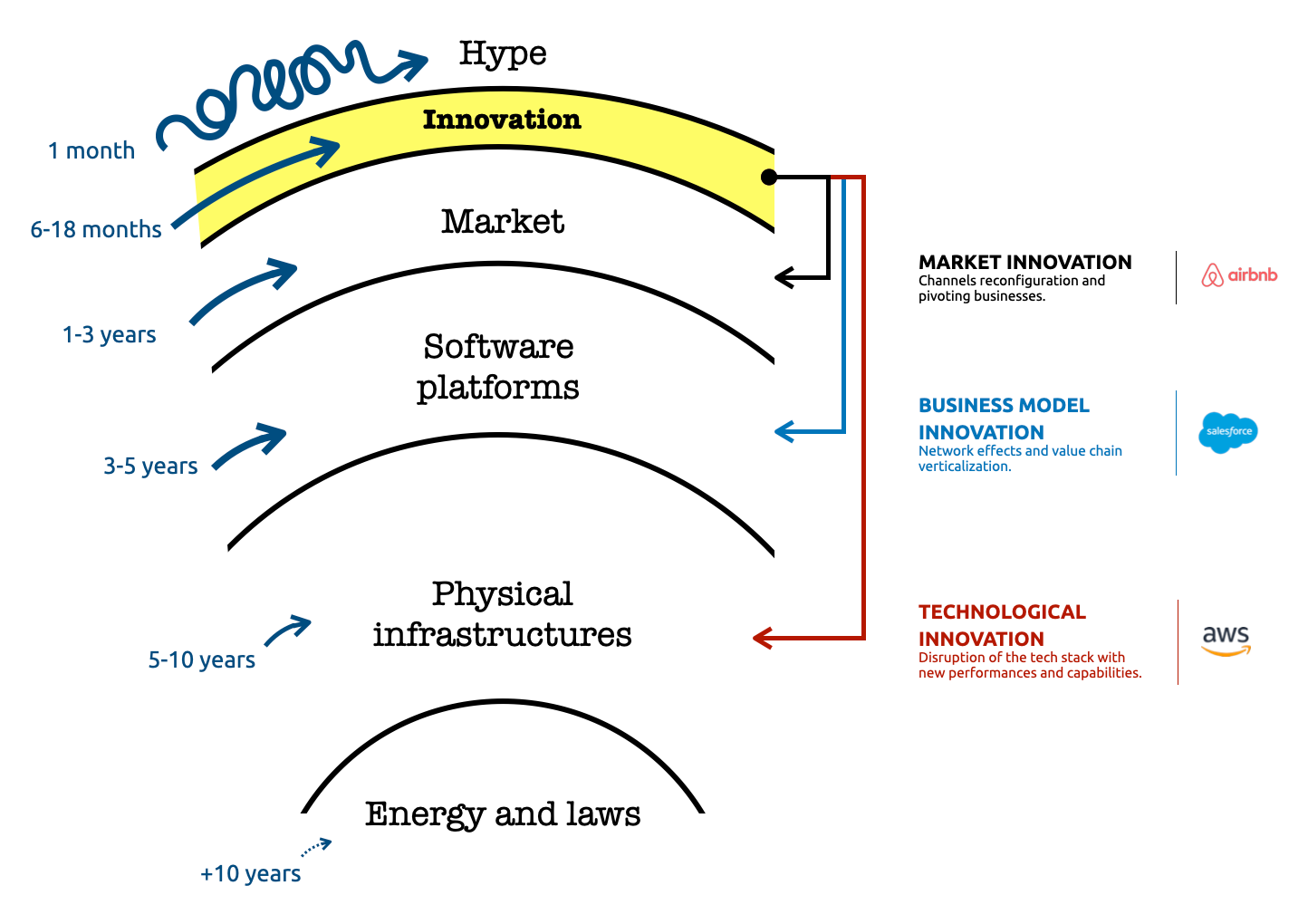
For instance, technological innovation rarely hits the market layer directly. It generally has to impact and transform physical infrastructures, which will unlock new software capabilities and produce market change. This is why Moore's law is vastly misunderstood at first: we can easily monitor how technological capabilities grow at exponential speed but fail to see the connection with how the market will change until it's too late. This market change is only a second order of consequences of technological innovation; a vast and slower ripple effect of the underlying stacks if you will.
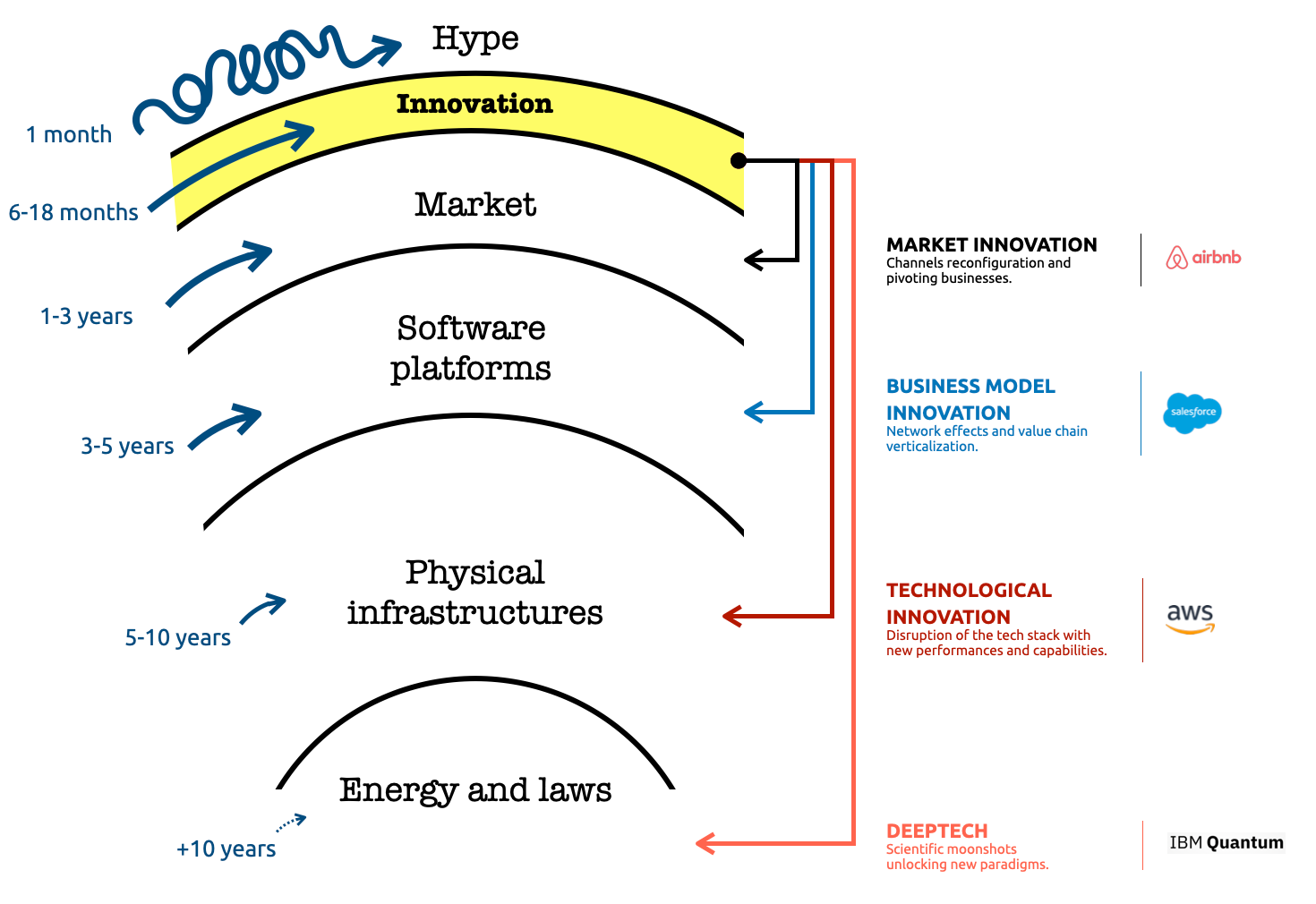
And deeper forms of innovation are, by nature, even slower to produce any form of impact (if they even do):
Not to mention that a lot (most) of all these innovation trajectories are dictated not by any market transformation will, but by our collective taste for hype and all things that glitter:
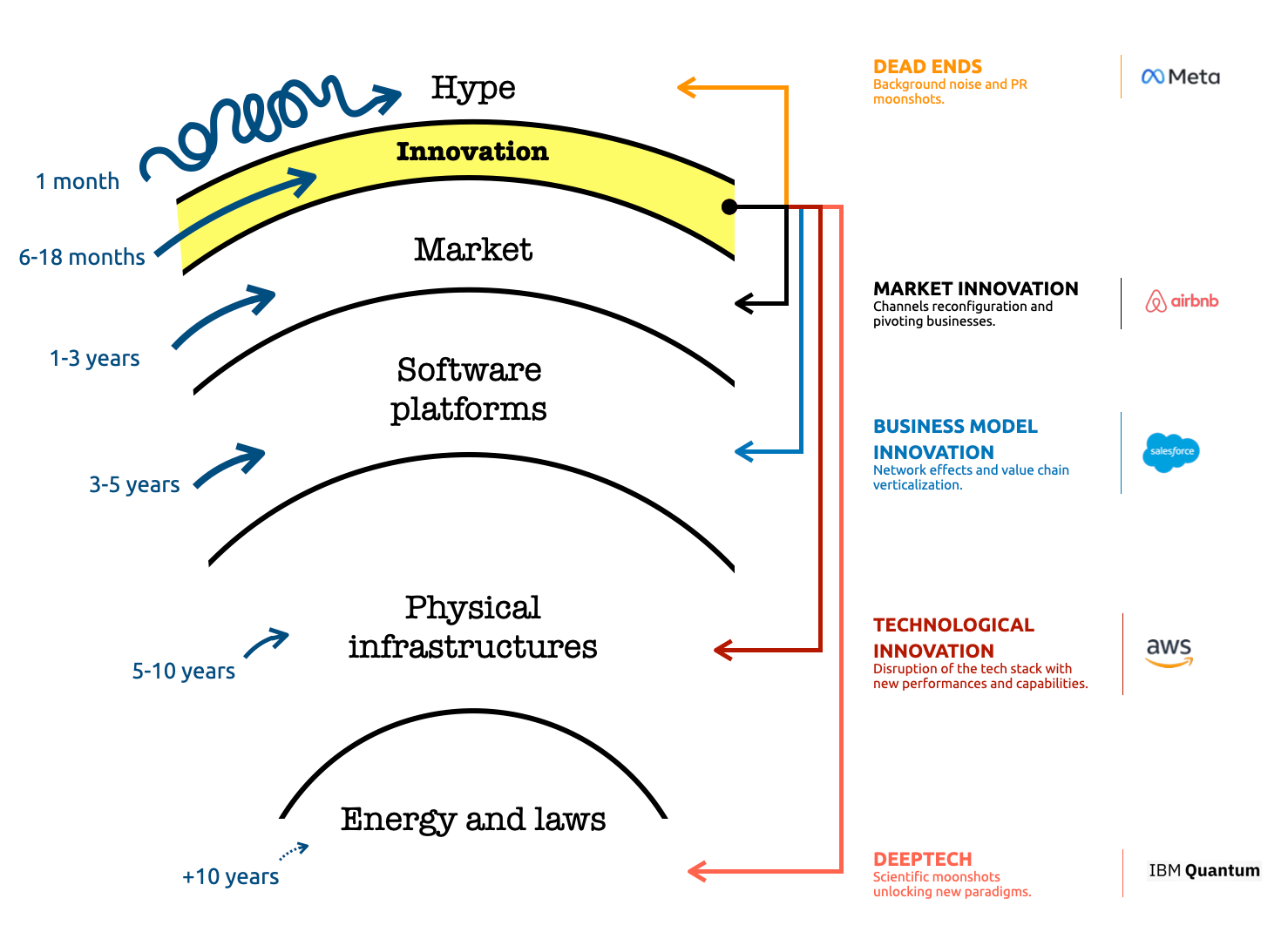
The key take-away is not only about the speed at which a given form of innovation might produce a return on investment but also that there are many possible ROIs to expect. Moving the needle on the energy and laws stack of the ecosystem ripples out in many ways, unlocking customer awareness, activating new partnerships, nudging your corporate culture out of its complacent comfort zone, etc.
Understanding this should obviously be an interesting first step toward a proper innovation portfolio strategy. 😎