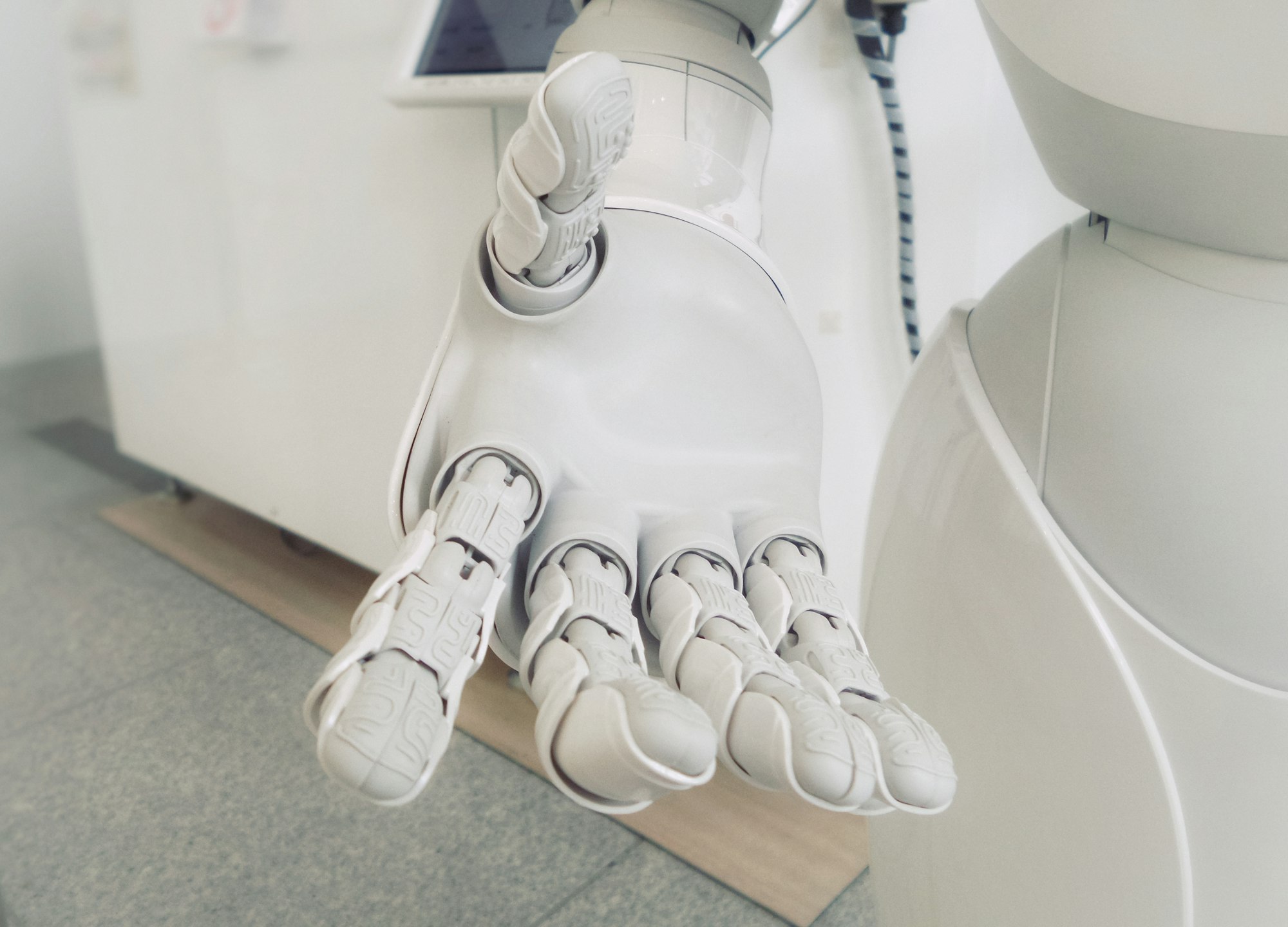
Why everyone's talking about humanoid robots all of a sudden?
Part 1 of a five-part series on how humanoid robots quietly became investable while everyone was watching large language models.

Unitree shipped more than 5,500 humanoid units in 2025 and is targeting 10,000 to 20,000 units in 2026; AgiBot doubled its cumulative shipments from 5,000 to 10,000 units in roughly three months; TrendForce now forecasts that global humanoid shipments will exceed 50,000 units this year, a jump of over 700 percent. Even Tesla is now trying to reinvent itself, installing Optimus Gen 3 production tooling at its Fremont plant on 21 January 2026, the same week it killed the Model S and Model X to free up floor space for the robots.
Read the coverage, and you would think humanoid robot commoditization arrived overnight, somewhere between one Davos panel on large language models and the next. In this piece, and across the four that follow it, we will discuss how thinking it's an unexpected revolution gets the mechanism backward. All this has been ten years in the making; just not the way you expected it.
The humanoid robot disruption timeline runs a decade deeper than the headlines suggest
Humanoid robots, as a technology, have always been hampered by many impracticalities. But while Boston Dynamics demoed humanoid robots doing backflips and not much else, solid-state battery energy density research, actuator miniaturization at firms most people had never heard of, and imitation-learning techniques for robot control were all grinding forward quietly through the years.
What specifically changed in 2025 and 2026 is that these separate tech curves finally crossed close enough together, at roughly the same moment, to make a commercially viable product. It's not so much that the robot was invented, but rather that the ingredients finally clicked together. This is, I think, the single most underappreciated fact about how technology disruption actually unfolds, and it is a pattern I have tracked closely enough across other sectors, from mobile payments to generative AI.
I described the mechanism behind this in more structural detail in my Big Technology Framework, where I lay out how a technology's cone of possibility widens for years on speculation and a handful of prototypes before a bottleneck compresses it, quite abruptly from the outside, into the one or two forms the market can actually absorb.
The bottleneck is the visible part. It is the part that makes headlines, the part that gets a Bloomberg chart and an analyst note. What almost never gets covered is the years spent inside the widening cone, where a dozen unrelated engineering teams are each solving a piece of a puzzle none of them can see completed, and where most of the failures never make the news precisely because they failed quietly on their own.
Grey swans, not black swans, explain most technology disruption
There is a useful distinction between a black swan (an event nobody could have reasonably anticipated) and a grey swan: an event that was entirely predictable in direction, only badly mistimed in most people's forecasts. Humanoid robot commoditization is a textbook grey swan. Anyone tracking lithium-ion energy density curves, servo motor cost declines, or the maturation of vision-language-action models could have told you, plausibly as early as 2022, that a viable humanoid product was coming within a small number of years.
What almost nobody could tell you was which year, which company, or which specific configuration of these techs would cross the threshold first. That uncertainty is precisely what makes the eventual arrival feel sudden even to people who saw it coming in broad outline – guilty as charged.
Naturally, this creates a recurring strategic trap for large corporations sitting on the sidelines. Waiting for a technology disruption to become undeniable, meaning waiting until it has already cleared the bottleneck and taken its final market form, guarantees you are reacting to a shape that competitors who tracked the underlying curves have already positioned against for years. The European industrial groups I work with tend to ask the wrong question when a story like Optimus Gen 3 breaks: whether the robot is real, when the more useful question was already answerable two or three years earlier. And the magic question was: which underlying technology curves were converging toward a viable product at all, and at what speed?
That question did not require trusting Tesla not to scam investors away from its rapidly sinking car business. It required connecting the dots clearly displayed in materials science journals and robotics conference papers that almost nobody in a strategy department was assigned to track.
The four articles that follow this one take apart the specific curves that converged to make humanoid robots commercially real:
- What AI itself contributed to fields like battery chemistry that have nothing to do with chatbots.
- Why the human body turned out to be a genuinely useful design despite being mediocre industrial engineering.
- Why the retrofit economics of existing factories favor a humanoid form over purpose-built automation.
- And why China's approach to gathering the data these robots need to learn from may put it ahead of the United States, regardless of who builds the better underlying model.
Each stands on its own. Read together, they describe the anatomy of a disruption that assembled itself in full view of anyone willing to look somewhere other than the headlines.
Stay tuned.
Next part:
 Philippe MEDA