
Elegantly downselling: Apple and the MacBook Neo
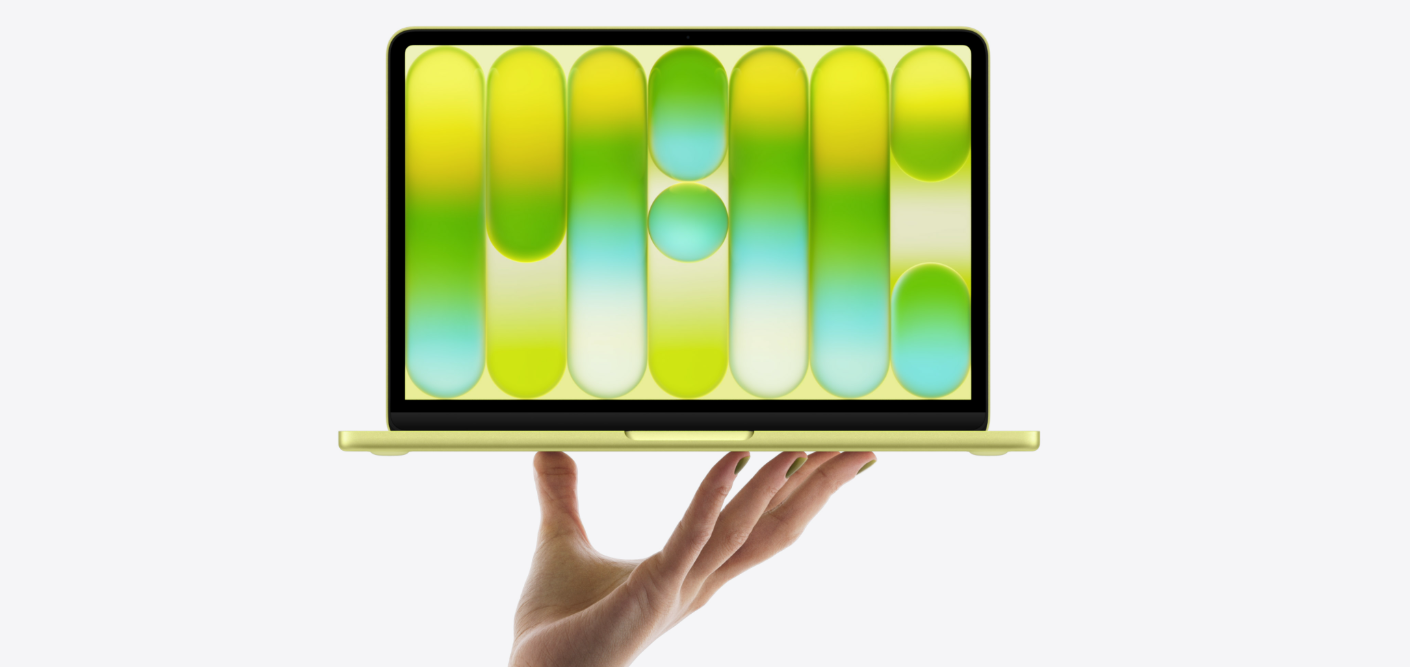
Yesterday, Apple announced the MacBook Neo, and most analysts commented on its aggressive $499/€599 price tag (for education), and on how it got there by using a relatively cheap A18 iPhone chip inside a Mac body.
Fine.
All of that is true, but remember the product is only the output of the strategy, and reading the specs will only get you so far in understanding what Apple is doing. While at the end of last year I was discussing this rumor of a cheaper MacBook and the risks for Apple, I was writing:
A down-selling strategy is not synonymous with devaluing your product or service, making it cheaper, or removing features. Down-selling entails a strategic overhaul of your business operations, prompting a reassessment of how value is generated, delivered, and monetized. The goal is to access market segments that your business model historically overlooked (certainly for good reasons at the time), which doesn't just mean "make it cheaper."
And it seems Apple is perfectly on point with the MacBook Neo.
A page from Steve Jobs' playbook
John Gruber at Daring Fireball surfaced a remarkable two-minute clip from August 2007 when Steve Jobs, on a stool at the Infinite Loop Town Hall, responded to whether Apple wanted to chase PC market share. His answer has aged extraordinarily well:
Our goal is to make the best personal computers in the world and to make products we are proud to sell and would recommend to our family and friends. And we want to do that at the lowest prices we can. But I have to tell you, there's some stuff in our industry that we wouldn't be proud to ship… We just can't ship junk. We don't offer stripped-down lousy products. We just don't offer categories of products like that.
That seems rather obvious, but there is a subtle point at play when you engage in an effective down-selling strategy: you don't compromise on what your brand standards are or on the core value you deliver to the market. It's what most companies miss: they make a downgrade instead of a proper downsell.
There is a fundamental difference between a cheap product and an affordable one. The MacBook Neo is the latter. It is unburdened of features the new segment doesn't care about while keeping Apple's signature features where they will matter. For instance, the body is still aluminium, but there is no FireWire connection.
Don't know what FireWire is? Exactly.
The segments nobody talked about
Every review I've read frames the MacBook Neo as an education play to steal market share away from the remarkably efficient Chromebook in US classrooms. And yes, that's part of the $499 education price, and Apple is clearly gunning for the institutional market it lost to Google a decade ago.
But the far more interesting story is the segment that nobody is naming: the vast, underserved population of people who simply need a laptop that works, and have spent years either making do with something frustrating, or doing without altogether.
The vast category of buyers buying cheap, plasticky HP laptops (the ones with creaky hinges, dim screens, and atrocious speakers, which still live at the $400-500 price point). This segment, which had quietly accepted that a good, reliable computer just wasn't for them.
Think about who actually sits in front of a $400 Windows laptop today because they couldn't justify spending more. Although I'm not currently working in this market, it's rather easy to map them out:
- Seniors & late adopters. The 65+ cohort that does FaceTime, email, news, photos, and video calls. They need something that works without a manual, without junkware or stupid AI features. Here, macOS probably accounts for 50% of the appeal.
- The "second computer" buyer. The professional who has a work machine but wants a personal laptop that travels light, not a power tool. Something to take to a café, on a weekend trip, or to the couch. The Neo fits a bag and a lifestyle.
- Solopreneurs and artisans. The florist managing his Instagram, the plumber sending her quotes by email, the seamstress with an Etsy shop. Their computing needs are modest and precise: browser, messaging, and a few apps. Here again, the Neo is ahead with Google's Chromebook.
- Emerging market and rural buyers. In markets where Apple has historically been aspirational but inaccessible, $599 is still significant- but for the first time, it's arguable. The total cost of ownership over five years of reliable macOS competes differently from a cheaper machine that degrades fast.
- NGOs, associations, and the social sector. The volunteer-run nonprofit, the local sports club, or the community radio station. Organizations that need reliable machines and hate IT overhead now have a procurement option that doesn't require a corporate budget to justify.
- The first-time Mac convert. For the Android user who already switched to an iPhone or the Windows user struggling with Windows 11 nonsense, he Neo removes the last objection. At $599, the cost of trying is finally proportionate to the curiosity.
None of these people is asking for Thunderbolt, FireWire, or Touch ID.
Apple didn't build a cheap Mac; they built one fitting many different segments that wouldn't have considered a Mac to begin with. This is where the downselling entire strategy lives.
The elephant in the room?
Reading this, you might start to think about the iPad, right? Indeed, what about it?
The original promise of the iPad was to be an entirely new category: the relaxed computer for people who don't need a full laptop. And it pretty much overlaps with all the segments the MacBook Neo is now targeting.
But the iPad arguably failed that promise in two ways.
First, it is by design extremely opinionated about how you work. The no mouse/keyboard paradigm it lived in for so many years, the locked filesystem, the only one-app-at-a-time choice, and, in general, the constant friction whenever you need to do something that feels obvious on a real computer. Sure, you can use an iPad as a computer, but it's still a pain in the ass (I tried, oh so many times).
Second, it drifted upmarket in price without ever fully resolving its identity. Today, the iPad Air starts at €799 in Europe, and the iPad Pro at €1099. Even if the base iPad sits at €389, and then you add a keyboard for a whopping €299 with the Magic Keyboard Folio (even with a cheap keyboard and mouse, you're still adding at least €100). Suddenly, you're looking at a €600+ machine that still can't run a full browser extension or manage a file system like a normal human being.
As of now, the MacBook Neo beats the iPad on every practical dimension for users who were supposed to want an iPad to begin with. And again, the discussion is not so much about price vs. features as it is about whether anyone can really tell what problem the iPad solves in the market anymore.
Downselling for more!
In any case, from an innovation strategy standpoint, Apple deliberately created new market access within a specific product category, engineered it to convert, not to cannibalize. As such, the Neo is a machine optimised for a different ceiling, at a price point that structurally changes who can participate in the Mac ecosystem.
And then there is the long game.
Every MacBook Neo sold today is still a services subscriber, an iCloud customer, a potential future MacBook Air buyer, and a person who will be locked into an ecosystem with, at some point, the desire to get an iPhone. Maybe this year, maybe next year, but eventually sustaining Apple smartphone dominance.
This is the positive paradox of an efficient downsell strategy: it will generate highest-margins revenue down the road.